

Table of Contents
Amazon Split Testing Guide to Optimize Listings for More Sales
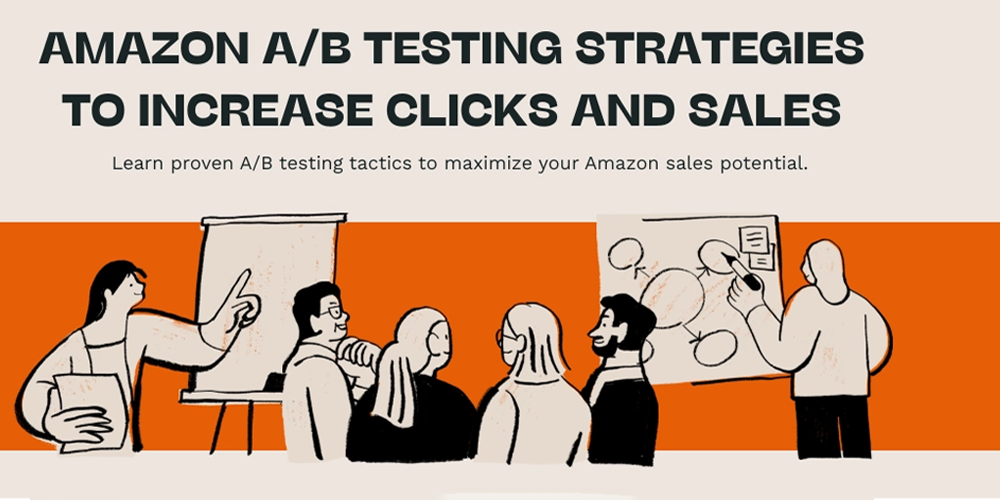
Selling on Amazon is a constant process of improvement. The marketplace changes fast, and customer preferences shift without much notice. What works in a listing today may not be as effective next month. This is where A/B testing could turn out to be a very useful instrument to sellers who wish to make decisions on the basis of facts rather than guesses. A/B testing implies the test of two variants of a listing to determine which performs better in the eyes of real shoppers. It enables you to experiment with title changes, images, bullet points, and even descriptions to get to know how they directly affect the sales. With Amazon offering tools to run controlled experiments, sellers now have a way to find what works best without risking the entire listing at once. The data from these tests can help you make changes that improve conversion rates, strengthen brand appeal, and increase long-term sales. Testing is not a one-time task but a key part of growing on Amazon.
How A/B Testing Works on Amazon Listings for Product Ranking
1. Overview of the Manage Your Experiments Tool
Amazon’s Manage Your Experiments, often called MYE, is a built-in feature for brand-registered sellers. It allows you to run controlled experiments on your product listings. You can test changes in titles, main images, bullet points, or A+ Content without risking the entire listing. The tool splits your audience automatically so that half of your traffic sees one version and the other half sees the alternative. MYE then tracks performance metrics for each version and provides clear results at the end of the test period.
2. The Concept of Split Testing
Split testing means creating two versions of the same listing to compare their performance. Version A is the original listing, and Version B is the modified one. Both versions run at the same time, shown to different groups of shoppers. This setup removes seasonal changes or outside factors as much as possible, so you can see the real impact of the change you made. The winning version can then be kept to improve conversions and overall sales.
What You Can Test in Amazon Listings for Better Sales
| Test Area | Purpose | Key Considerations |
|---|---|---|
| Product Titles | Improve discoverability and clarity for shoppers. | Include main keywords naturally, keep titles easy to read, and avoid keyword stuffing. |
| Main Images & Additional Images | Increase click-through rate and help shoppers visualize the product. | Test lifestyle images, infographics, and angles. Ensure all versions meet Amazon image guidelines. |
| Bullet Points | Communicate benefits clearly and quickly. | Use shopper-focused language, test the order of benefits, and keep bullets concise. |
| Product Descriptions & A+ Content | Build brand trust and answer objections. | Experiment with layout, visuals, and storytelling elements. |
| Pricing (with caution) | Match market expectations and perceived value. | Small price changes can impact sales volume and profit margin. Test carefully with strong data tracking. |
When to Run an A/B Test on Amazon Listings
1. Minimum Traffic Needs
- For reliable results, aim for thousands of sessions per week on the tested ASIN.
- Low-traffic products may require longer testing periods.
2. Product Lifecycle Stage
- New Launch: Use tests to refine core elements like images and titles quickly.
- Mature Listing: Focus on fine-tuning to gain incremental performance improvements.
3. Seasonal Timing
- Avoid running tests during large seasonal swings (Prime Day, Q4 holidays) unless testing seasonal-specific content.
- Stable traffic periods give cleaner, more reliable results.
Setting Up A/B Tests on Amazon Listings Correctly
Step 1: Choose a Single Variable
- Test only one element at a time to avoid mixed results.
Step 2: Form a Hypothesis Based on Data
- Example: “If I change my main image to a lifestyle shot, my click-through rate will increase by at least 3 percent.”
Step 3: Set the Duration
- Amazon recommends 4 to 10 weeks for statistical reliability.
- Longer tests are better for products with slower sales velocity.
Measuring & Interpreting Amazon Listing Test Results
Key Metrics to Track
- Conversion Rate (Unit Session Percentage)
- Sessions (traffic)
- Units Sold
- Revenue Change
Reading MYE Reports
- Amazon’s Manage Your Experiments shows statistical significance scores.
- If one version shows a clear improvement with 95 percent confidence or more, it is safe to declare a winner.
When to End Early
- If results are strongly in favor of one version before the planned end date.
- If there is an unexpected drop in performance due to outside factors.
Real-World A/B Test Examples
Example 1: Main Image Change
- In use as a changed lifestyle shot rather than a plain product shot.
- Outcome: CTR went up 5, and the conversion rate was up 3.
Example 2: Benefit First Bullet Points
- Started with the big benefit in the bullets and then elaborated on the features.
- Outcome: Increased dwell time on page and a 4 percent upsurge in sales.
Best Practices for Continuous Optimization
- Create a Quarterly Testing Calendar:
- Combine with External Traffic and PPC:
- Document All Changes:
Core listing tests should be planned so that they constantly improve.
Drive consistent test traffic through use of campaigns to get quicker results.
Record the test results so that you can decide not to repeat experiments that you have failed and be able to share the insights with the rest of your team.
Amazon Listing Conclusion & Next Steps for Optimization
A/B testing removes guesswork from Amazon listing decisions and replaces it with proof from real shopper behavior. By testing one element at a time and tracking the results with Amazon’s Manage Your Experiments tool, sellers can make confident, data-backed changes that steadily improve conversions. The key is to test regularly, document results, and use findings to guide the next round of improvements. This approach not only increases sales but also strengthens brand presence over time. Sellers who commit to ongoing, structured testing see their listings evolve into powerful conversion assets rather than static product pages. For those who want a reliable partner to plan, execute, and analyze these tests effectively, Squatio provides the expertise and resources to make every change count toward measurable growth.
Frequently Asked Questions
What is Amazon's Manage Your Experiments (MYE) tool?
MYE is a built-in feature for brand-registered sellers to run controlled A/B tests on titles, main images, bullet points, or A+ Content. It automatically splits your audience so half sees one version and half sees the alternative, then tracks performance metrics for each.
What elements can I A/B test on an Amazon listing?
Product titles, main and additional images, bullet points, descriptions and A+ Content, and pricing (with caution, since small price changes can affect sales volume and margin). Test only one variable at a time to avoid mixed results.
How long should an Amazon A/B test run?
Amazon recommends 4 to 10 weeks for statistical reliability, longer for products with slower sales velocity. Reliable results generally need thousands of sessions per week on the tested ASIN.
How do I know when an A/B test has a clear winner?
Manage Your Experiments reports a statistical significance score for each version. If one version shows a clear improvement with 95 percent confidence or more, it's safe to declare a winner.
When should I avoid running an Amazon A/B test?
Avoid testing during major seasonal swings like Prime Day or Q4 holidays unless you're specifically testing seasonal content -- stable traffic periods give cleaner, more reliable results.
Recent Blogs

Amazon Seller Repricing Strategy Guide for 2026
In today’s fiercely competitive Amazon marketplace, maintaining optimal pricing can be the difference between thriving and struggling. As w…
Learn More →
Amazon FBA Cash Flow Management for Sellers in 2026
In the dynamic world of e-commerce, managing your Amazon FBA (Fulfillment by Amazon) inventory and finances is crucial. As we move into 202…
Learn More →
Amazon Brand Story and A Plus Content Best Practices for 2026
In the e-commerce landscape of 2026, creating a compelling brand story and a plus content strategy is no longer just an option—it's a must-…
Learn More →
Amazon FBA Q4 Holiday Inventory Planning for 2026
The holiday season is just around the corner, and as an Amazon seller in 2026, you need to make sure your inventory is ready to capitalize …
Learn More →
Amazon FBA Wholesale vs Private Label 2026
As the e-commerce landscape continues to evolve in 2026, Amazon sellers must navigate a complex decision: whether to pursue wholesale or pr…
Learn More →
Amazon Seller Performance Notifications Explained: Your Comprehensive Guide for 2026
As an Amazon seller in 2026, staying ahead of the competition means understanding and utilizing every tool available to you. One such power…
Learn More →
A Comprehensive Amazon Ungating Guide for Restricted Categories 2026
The landscape of the Amazon marketplace is constantly evolving, and staying ahead requires strategic maneuvering. As of early 2026, many se…
Learn More →
Amazon Vine Program for New Sellers Explained: Your Path to Rapid Growth in 2026
Vine members are often the first to experience and review products, giving them an advantage over non-Vine reviewers. For new sellers navig…
Learn More →